
Use what you have
Just Chicken and Pasta in the House: 5 Dinners and How to Choose One Tonight
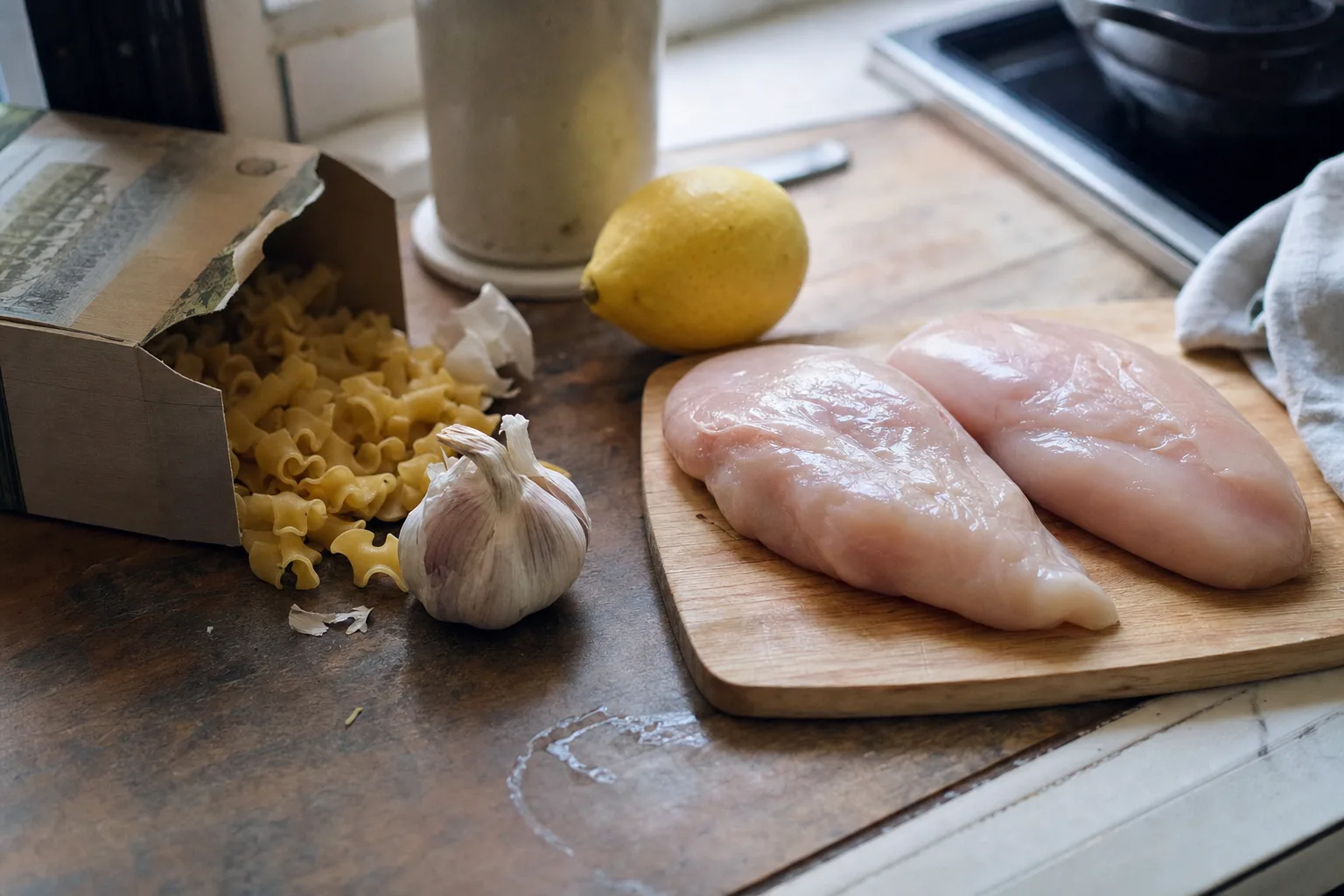
Quick answer: Don't start from a recipe. Look at the chicken. Already cooked, thick and raw, cubed, thighs, or a frozen brick each point at a different dinner, and once you name which one is sitting in your fridge, four of the five options are gone before you have thought about what you feel like eating.
Chicken and pasta is the most common pair of things to own and one of the hardest to decide about, because unlike ground beef it does not have one shape. Beef is crumbles no matter what you do with it, so the only real question is the sauce. Chicken arrives as a whole raw breast, a bag of thighs, last night's leftovers, or something rock solid from the freezer, and each of those wants a different dinner. Sorting by the recipe is why you stall. Sorting by the chicken takes about ten seconds.
I have chicken and pasta, what should I make for dinner tonight?
Start with the state of the chicken. Already cooked goes into a garlic and lemon pasta at the end. Thick raw breast becomes thin cutlets sliced over the top. Cubed breast simmers into a cream or tomato sauce. Thighs go into a longer-cooking sauce. Frozen gets poached in broth and shredded.
Search "chicken pasta recipes" and you get an avalanche that is mostly one dish, creamy garlic parmesan something, reshot four hundred ways. That is not a shortage of options. It is a shortage of a way to cut. The five below are genuinely different dinners, and the thing that selects between them is already sitting in your fridge.
What are the 5 chicken and pasta dinners worth making?
Sorted by the chicken you have, not by speed: cooked chicken into garlic lemon pasta (15 minutes), seared cutlets over pasta (25), cubed chicken in a cream or tomato sauce (30), browned thighs shredded into sauce (40), and frozen chicken poached in broth then shredded (45).
1. Already cooked chicken, about 15 minutes. Leftover roast, last night's extra breast, a rotisserie carcass picked clean. Boil the pasta, and while it goes, warm garlic in olive oil or butter with a lot of black pepper. Toss the drained pasta in the pan with a ladle of its own starchy water, then fold the shredded chicken in at the very end, off the heat, so it warms rather than cooks a second time. Lemon and cheese if you have them. This is the whole dinner and it takes as long as the water takes. If your chicken came off a supermarket bird, we went deeper on that in leftover rotisserie chicken.
2. Thick raw breast, about 25 minutes. Lay the breast flat and slice it horizontally into two thin cutlets. Salt them, sear them hard in a hot pan for a few minutes a side, rest them while the pasta finishes, then slice across and lay it over buttered pasta, marinara, or pesto. This is the version that looks like a restaurant plate, and it exists because a thin cutlet cooks through before it dries out while a fat breast never quite does.
3. Cubed breast into a sauce, about 30 minutes. The low-energy one. Cut the breast into bite-size pieces, brown them in the pan, then build the sauce right on top of them: cream and parmesan, or a can of tomatoes, or a jar of whatever is open. One pan, one decision, and the chicken and sauce finish together instead of being two separate jobs.
4. Thighs into a longer sauce, about 40 minutes. Thighs are the forgiving cut. Brown them skin side down, then let them simmer in tomato while the sauce reduces, and shred them into it before the pasta goes in. This is the only one of the five you can walk away from for ten minutes without ruining, which on some nights is the entire reason to pick it.
5. Frozen solid, about 45 minutes. Nothing thawed and it is already six. Drop the frozen breasts into simmering broth with garlic and whatever herb is in the cabinet, cook until they shred with a fork, then use that broth as the sauce base with a little butter or cream. Cooking from frozen is safe, it just takes roughly half again as long as thawed, and poaching is the most forgiving way to do it.
Why does the chicken decide instead of the pasta?
Because the pasta is interchangeable and the chicken is not. Any shape works with any of these five. The chicken's state, cooked or raw, thick or cubed, breast or thigh, frozen or not, rules out most of the list on its own, so it is the fastest filter you have and it costs you no thinking at all.
This is a different cut than the one that works for ground beef and pasta, where every option is the same browned crumble and the useful question is which chore you refuse to do tonight. With chicken, the chore question comes second. Ask it first and you will happily choose a seared cutlet dinner while the only chicken in the house is frozen through, which is how a decision that felt made turns back into a decision at 6:40.
Run it live. The fridge has a container of Sunday's roast chicken. That deletes four options instantly, and you are making garlic lemon pasta in fifteen minutes without having weighed anything. Or the fridge has two fat raw breasts and you have some energy: cutlets. Two fat raw breasts and no energy: cubed, into a sauce. Same ingredients, and the answer changes based on something you can see rather than something you have to decide.
How do you keep the chicken from drying out?
Stop timing the chicken to the pasta. Dried pasta needs roughly nine to eleven minutes and thin chicken needs less, so the water goes on first and the chicken second. Chicken is done at 165F, not at "when the pasta is ready," and cooked chicken you are reheating should go in last, off the heat.
Dry chicken in a pasta dish is almost never a recipe problem. It is a scheduling problem. Most people put the chicken in the pan when the pasta goes in the water so everything lands at once, which means a cutlet that needed six minutes gets ten. Thin pieces finish fast, so start them late, pull them at 165F, and let them rest while you drain. If you are folding leftover chicken into a hot pan, kill the heat first. It is already cooked. All you want is warm.
What if all you have is chicken, pasta, and nothing else?
You still have dinner. Garlic, fat, salt, pepper, and a ladle of the starchy pasta water make a sauce that actually coats. Reserve a cup of that water before you drain. Lemon, butter, or grated cheese each make it better, and a bare-pantry version with none of them is still a real meal.
The reserved pasta water is the part everyone skips and the part that does the work, because the starch in it is what turns oil or butter into something that clings to noodles instead of pooling at the bottom of the bowl. If the cabinet has one more thing, spend it in this order: garlic, then acid, then cheese. Skip any recipe with more than about six ingredients on a night like this. The direction stays the same, only the seasoning moves.
How RecipePT narrows it for you
Tell RecipePT what you have and it comes back with a short set of ideas built from these same directions, already shaped to what you actually cook, instead of a scroll of near-identical creamy garlic results. It knows the cut matters, so "chicken thighs and pasta" and "leftover chicken and pasta" do not return the same dinner.
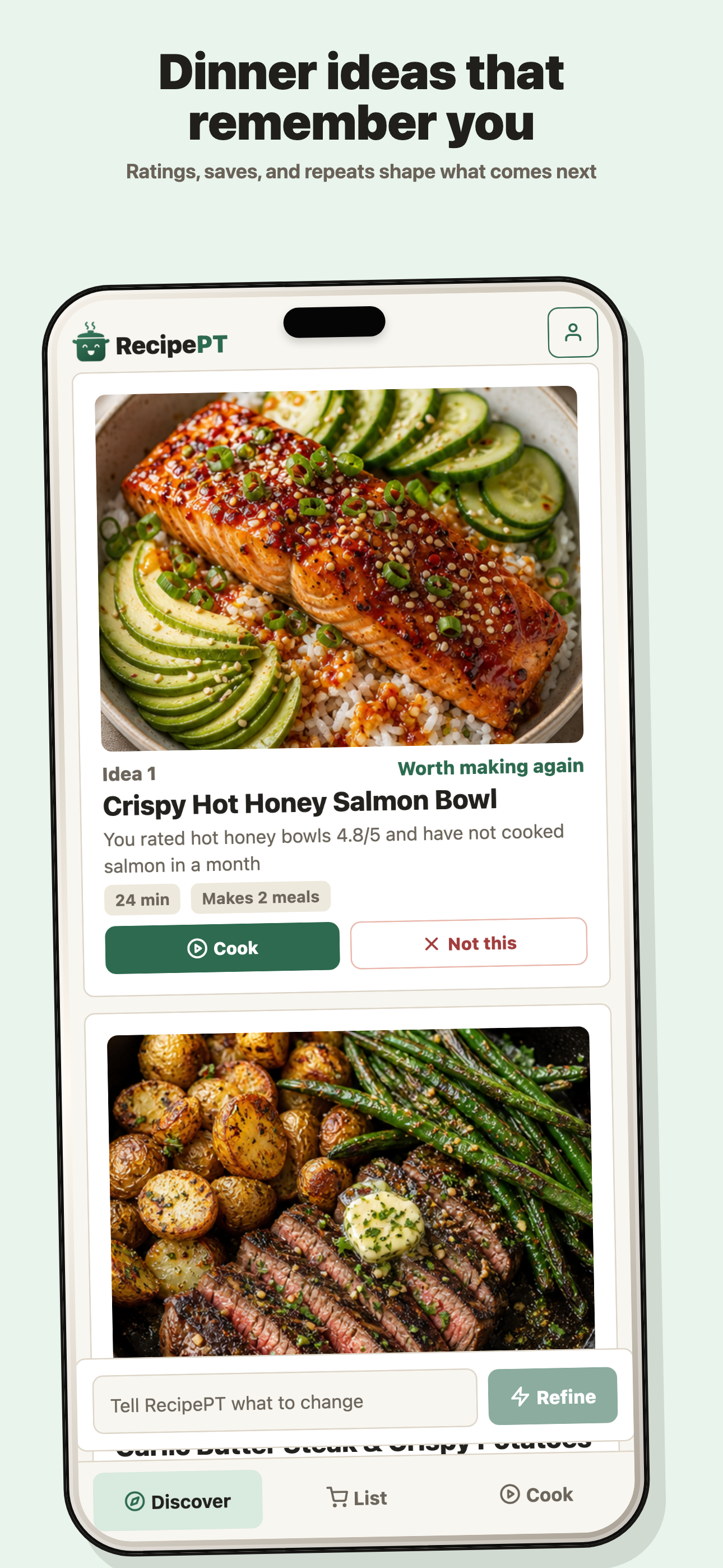
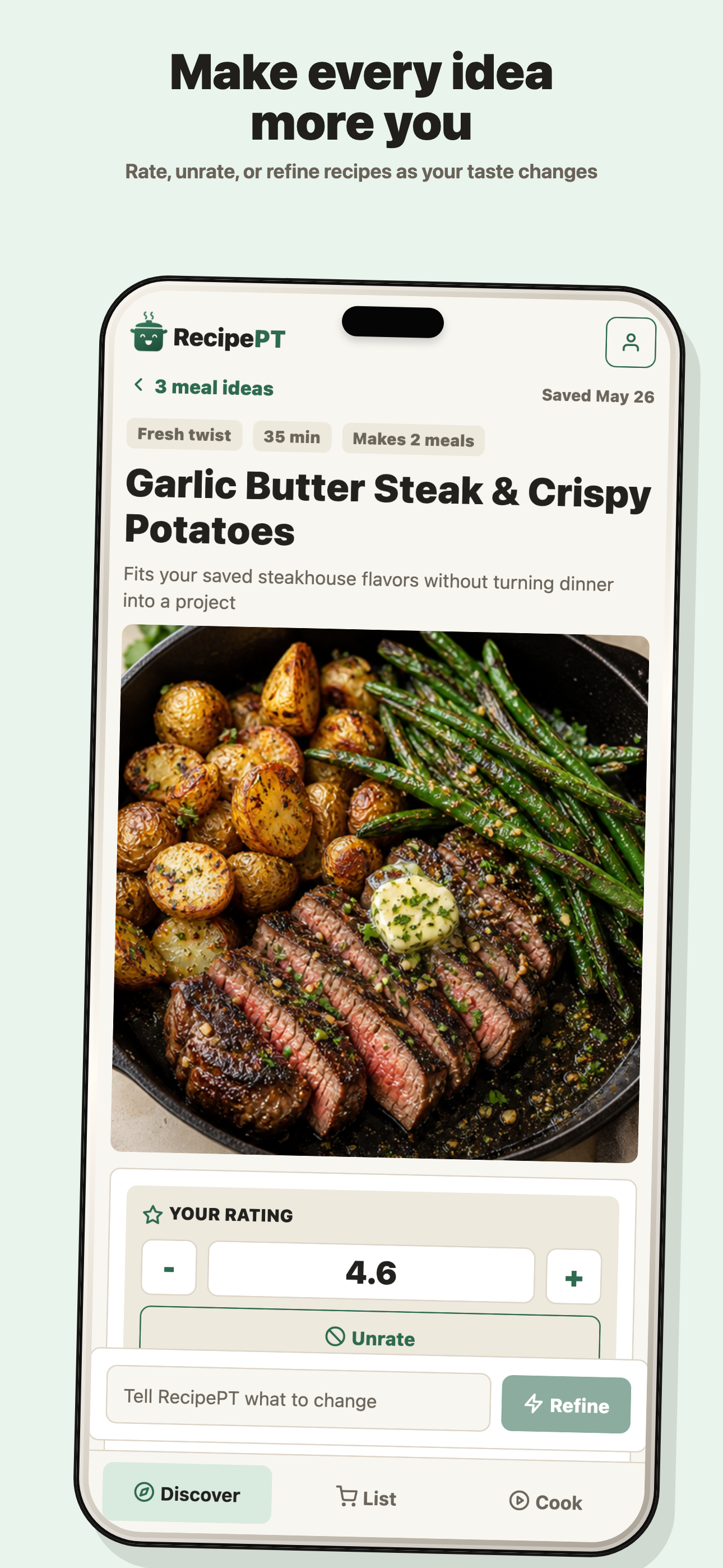
Then you steer it in plain words instead of in your head. Type "the chicken is still frozen" and it moves toward the poached version. Type "no cream" and the cream sauce leaves and stays gone. Type "more like the last one" and it leans into whatever you picked last time. Say it once and it holds, which is the difference between an app you re-teach every night and one that starts closer to right.
Same move either way, app or no app: look at the chicken, cut the list to one, go cook it. If the fog is wider than tonight's two ingredients, the general version of this is dinner decision fatigue, and it responds to the same shrink-the-options move.
Let RecipePT decide tonight
Say what is in the fridge and what you can't eat, once, the way you would say it out loud. RecipePT holds onto it, so tomorrow night starts closer to right. On iPhone.
Get RecipePT on iPhoneCommon questions
What can I make for dinner with just chicken and pasta?
Five directions cover almost every night: garlic and lemon pasta with already-cooked chicken folded in at the end, sliced seared cutlets over buttered or tomato pasta, cubed chicken simmered into a cream or tomato sauce, browned thighs shredded into a longer-simmering sauce, and chicken poached from frozen in broth then shredded. Which one is right depends on the state your chicken is in.
How do I keep chicken from drying out in a pasta dish?
Stop timing the chicken to the pasta pot. Chicken is done at 165F internal, and thin pieces get there in well under the nine to eleven minutes dried pasta needs, so start the water first and the chicken second. Slice thick breasts horizontally into thin cutlets, and add already-cooked chicken at the very end, off the heat.
Can I cook chicken and pasta with no sauce in the house?
Yes. Garlic, olive oil or butter, salt, pepper, and a ladle of the starchy pasta water make a real sauce that coats. Lemon, a knob of butter, or a handful of grated cheese each improve it, and none of them are required. Reserve the pasta water before you drain, because that is the part people forget.
Can I cook chicken for pasta straight from frozen?
Yes, as long as you cook it through. USDA guidance is that cooking from frozen is safe and takes roughly 50 percent longer than thawed. Simmering frozen boneless breasts in broth until they shred easily and read 165F is the most forgiving route, and the broth becomes the base of the sauce.