Deciding what's for dinner
Dinner Decision Fatigue: Why Choosing What to Cook Is So Exhausting, and How to Stop
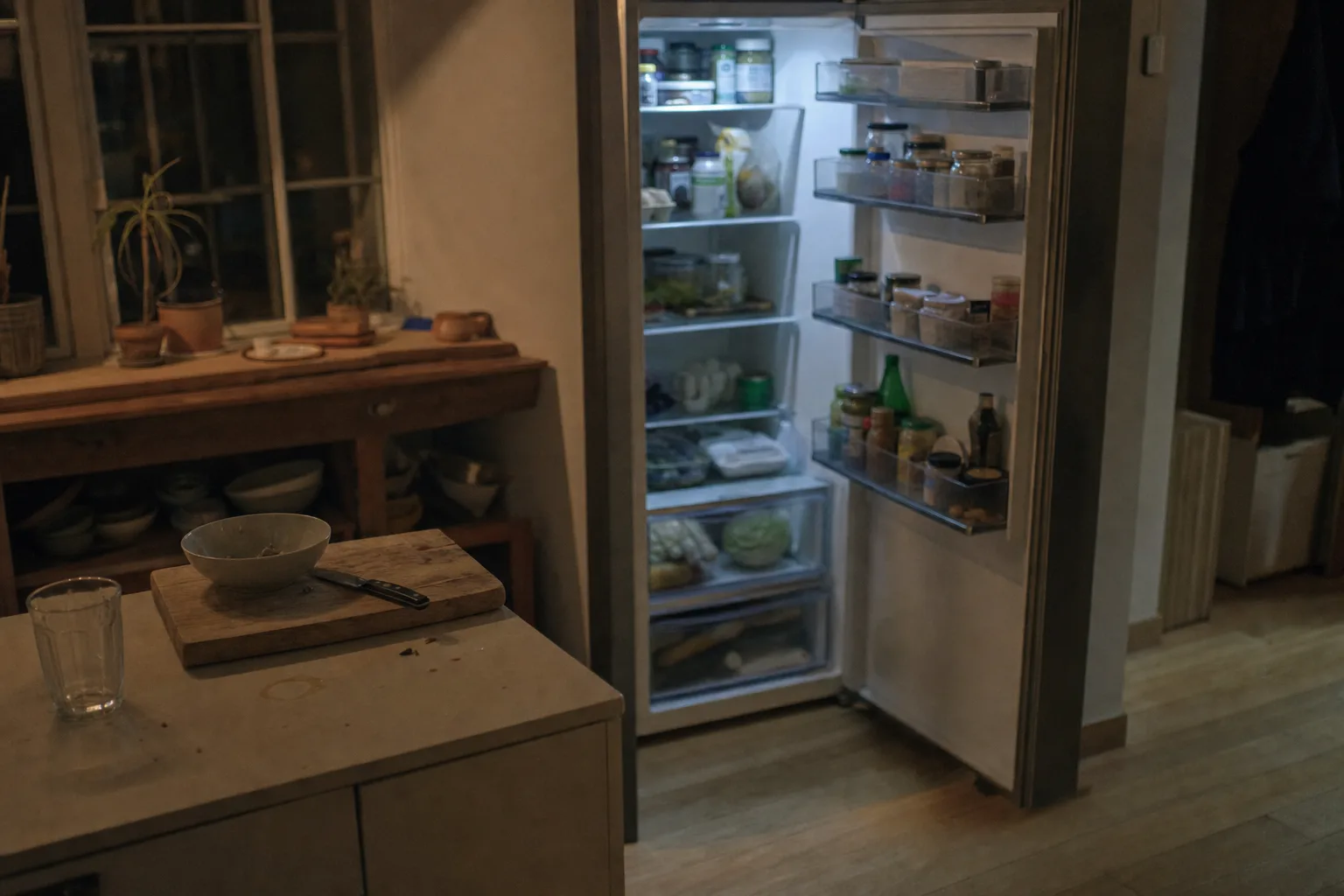
Quick answer: Dinner decision fatigue is the exhaustion of choosing what to eat night after night. It isn't laziness or a shortage of recipes: the question is open-ended, loaded with constraints, and it lands when your willpower is already spent. Shrink the choice to stop it, with theme nights, a short rotation, or a few tailored options.
The hardest part of dinner is not the cooking. It is the deciding. By 6pm you have already made a thousand small calls, and the simple question "what's for dinner" lands heavier than it should. This is why that happens, and how to make the nightly decision almost disappear.
What is dinner decision fatigue?
Dinner decision fatigue is the mental exhaustion that comes from having to choose what to eat night after night. It is not laziness and it is not a shortage of recipes. It is the cost of making one more open-ended decision at the end of a day that was already full of them, when your willpower is at its lowest.
Decision fatigue is a documented effect: the more choices you make in a day, the worse and the slower your later choices get. Dinner sits right in the crosshairs. It repeats every single day, it has no obvious right answer, and it arrives at the exact moment you have the least left in the tank. You are not tired of cooking. You are tired of choosing.
Why is deciding what to cook so exhausting?
Because the question is open-ended and tightly constrained at the same time. You are not choosing among three options, you are choosing from thousands, while filtering for time, budget, what is in the fridge, and who will actually eat it. Infinite choice plus hard constraints is what drains you.
There is a name for half of this. The paradox of choice: as options go up, so does anxiety, and satisfaction with whatever you finally pick goes down. A bigger recipe feed does not help you decide. It just gives you more ways to second-guess.
The other half is the invisible load. In most households one person quietly carries the planning: remembering that one kid will not touch onions, that there is half a pepper to use up, that you had pasta twice already this week. None of that shows up as work, but all of it runs in the background and wears you down.
It is also common. In a December 2024 survey of 1,000 partnered American adults conducted by Wakefield Research for the meal-kit brand Factor, 68% said deciding what to eat was their biggest mealtime challenge, ahead of the cooking itself. Treat that as a read on partnered Americans rather than independent research on everyone, but the direction is clear: the deciding, not the doing, is the hard part.
How do you stop deciding what's for dinner every night?
Stop trying to pick from everything. Shrink the decision: use a short rotation, set theme nights, or let something hand you a few good options instead of the whole internet. Deciding between three things you would happily eat takes seconds. Deciding from infinity takes all evening.
Here are the common systems, ranked by how little effort they take to keep up:
- Theme nights. Monday pasta, Tuesday tacos, Thursday stir-fry. You remove the whole category decision and only choose the details. Lowest effort, slightly repetitive.
- A short rotation. Keep a list of ten dinners you actually like and cycle them. You almost never start from a blank page.
- Decide by what you have. Start from the two or three things already in the fridge instead of from a craving. Fewer ingredients means fewer options means a faster call.
- Let something pick for you. Hand the choice to a tool that gives you a few tailored options, so you react instead of generating from scratch.
- Plan the week in one sitting. Effective, but it front-loads the work and falls apart the first night life does not cooperate.
Why do fewer choices actually make dinner easier?
Three is enough to feel like a real choice and few enough to decide fast. A short list you would all be happy with beats an endless feed you have to sort. The goal is not the perfect meal. It is a good-enough decision, made quickly, so you can get on with your night.
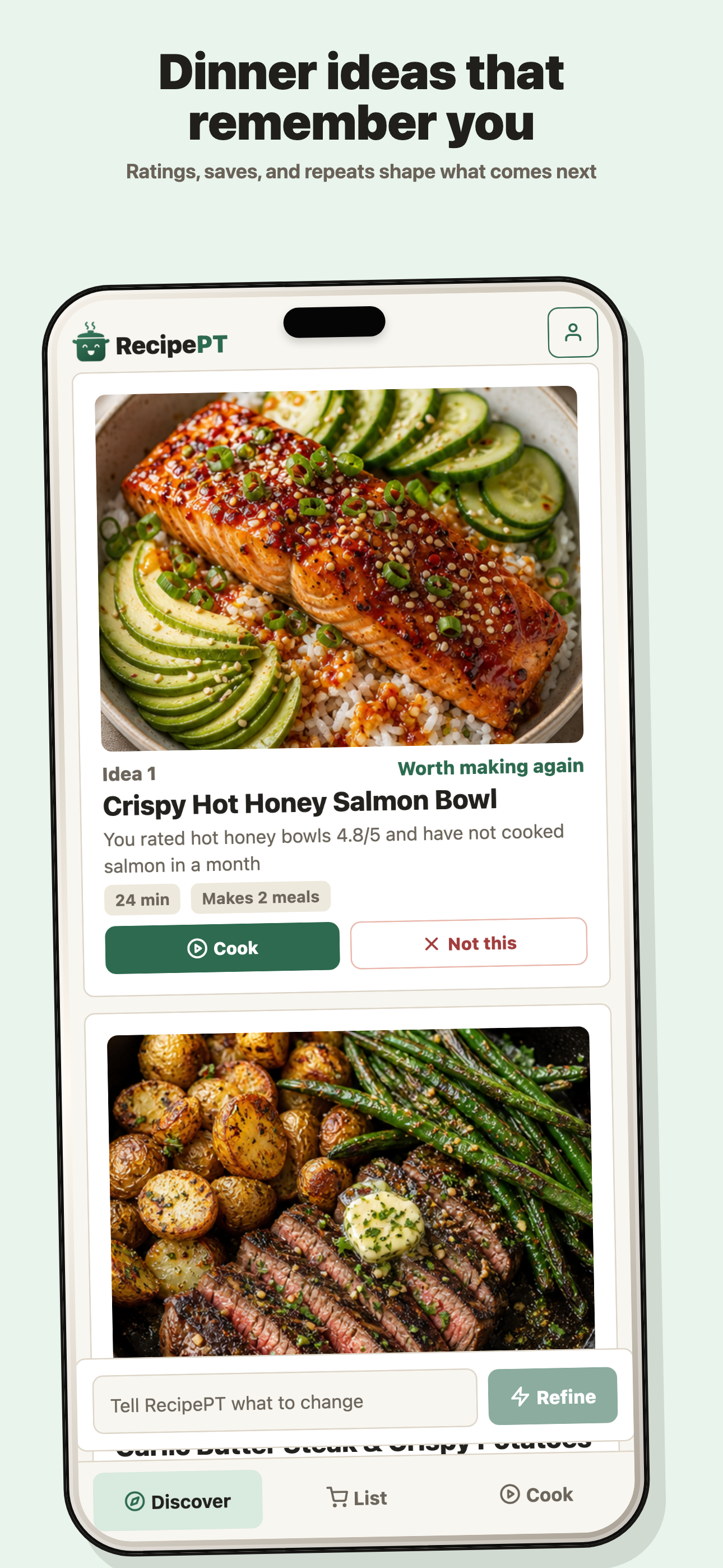
This is the whole idea behind how RecipePT works. Instead of a feed of two hundred recipes to scroll, it gives you three ideas at a time, shaped by your mood, what you have on hand, your allergies, and what you have liked before. You are choosing between a few good options, not auditioning the entire internet.
How RecipePT removes the dinner decision
You open it and tell it what sounds good, or say nothing and let it read your taste. It comes back with three ideas, not a wall. From there you steer in plain language. Type "no chicken" and the set changes. Type "lighter" or "more like the last one" and it adjusts again. You are refining a decision, not running a new search.
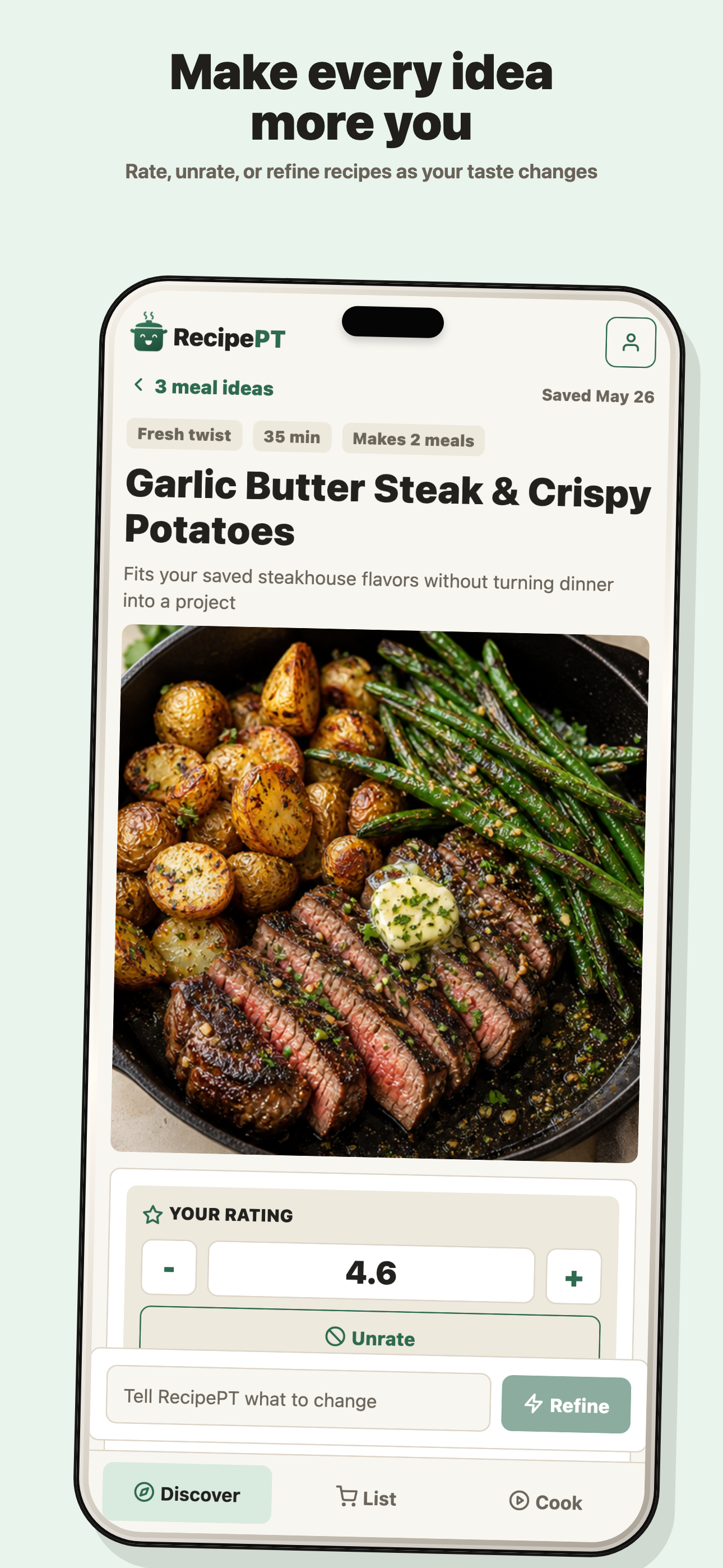
The part that matters most for decision fatigue is memory. Your ratings, saves, and cooking history shape the next set, so the three ideas get more like you every week. The decision keeps getting smaller because the options keep getting more right. When you settle on one, it turns into a grocery list or a step-by-step cook mode, so the deciding flows straight into the doing.
Let RecipePT decide tonight
Stop choosing from everything. Get ideas made for your taste, refine them in plain language, and decide in seconds.
Get RecipePT on iPhoneCommon questions
Is dinner decision fatigue a real thing?
Yes. It is an everyday version of decision fatigue, the documented drop in decision quality after making many choices. The dinner question is uniquely draining because it repeats daily, is open-ended, comes loaded with constraints, and lands when your willpower is already spent.
What is the fastest way to decide what to cook tonight?
Shrink the choice. Instead of picking from everything, pick from a few options you would all happily eat, sorted by what you have and how much time you have. Deciding between three good ideas takes seconds.
Does meal planning fix decision fatigue?
It helps, because it moves the decisions into one calmer moment instead of seven tired ones. But it front-loads the work and breaks the first time life does not go to plan. A lighter fix is to narrow each night's choice to a short, tailored set.