
Use what you have
Chicken Thighs and Potatoes: 5 One-Pan Dinners and How to Pick Tonight
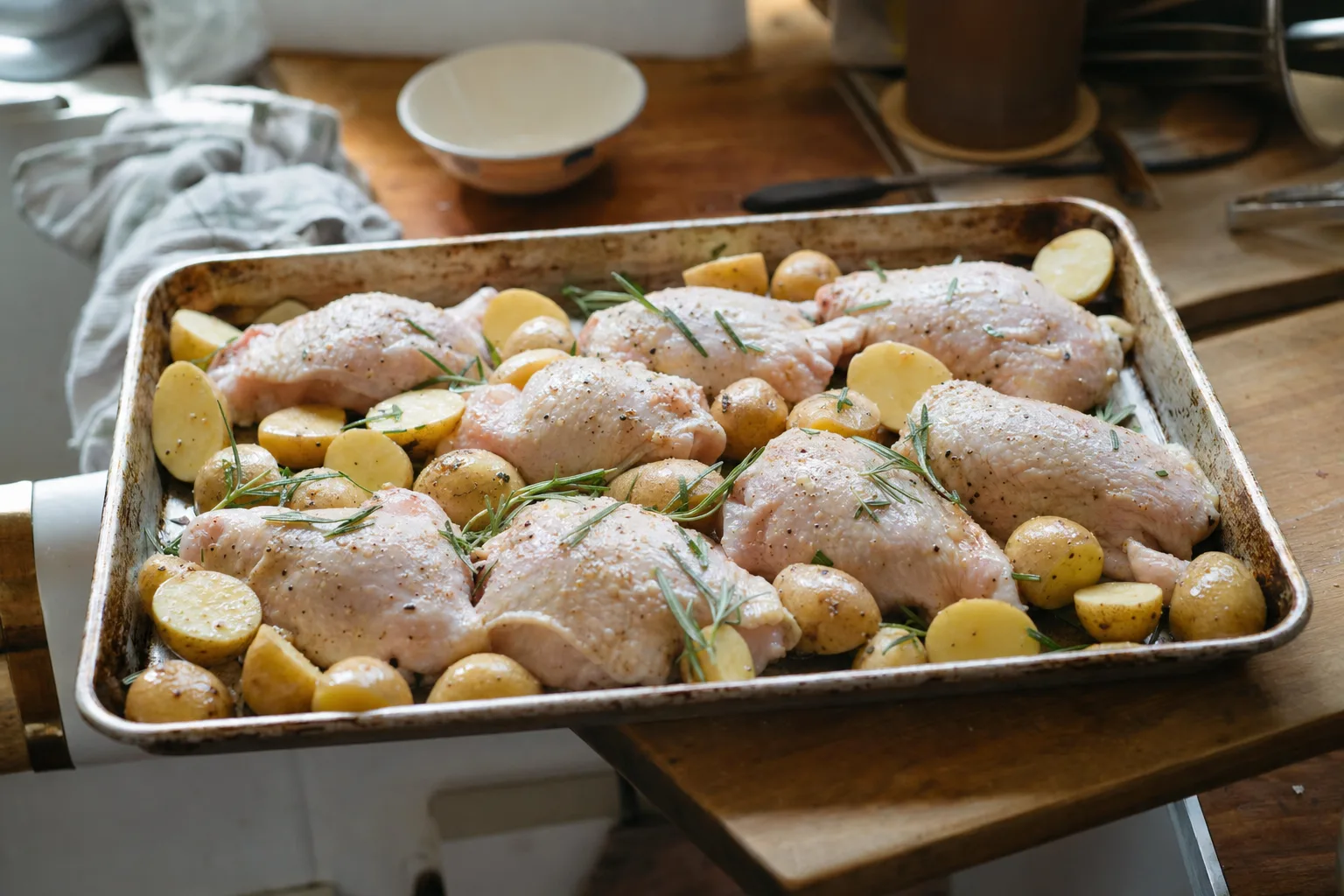
Quick answer: Pick by what you want the potato to be. Crisp means a sheet pan, about 45 minutes. Craggy and buttery means smashed potatoes, 40. Soft in the pan juices means a braise or the Greek lemon version, 50. Fast means a diced hash, 25. Bone-in thighs match potato timing; boneless thighs need a head start.
A package of thighs and a bag of potatoes is the most forgiving pair in the kitchen, and also the one people stare at longest. Not because it is hard. Because every result you find is sorted by cuisine, and cuisine is not what you are actually choosing between at 6:30. Here is the useful reframe: the chicken is not the decision. Thighs survive almost anything you do to them. The potato is the variable, and once you decide what you want the potato to be, there are only about five dinners left and the timing sorts itself out.
What can I make with chicken thighs and potatoes for dinner tonight?
Pick by what you want the potato to be, then the dish follows. Crisp means a sheet pan. Craggy and buttery means smashed. Soft and soaked in the pan juices means a braise or the lemony Greek version. Fast means diced into a skillet hash. Everything else, including the seasoning, is interchangeable.
The reason this works is that thighs are the least demanding cut of chicken you can buy. They have enough fat and connective tissue that an extra ten minutes makes them better rather than worse, which is the opposite of a chicken breast. So the failure mode of a thigh and potato dinner is never the chicken. It is potatoes that are still hard in the middle when the chicken is done, or potatoes that went soft and pale because they were piled two deep on the pan. Both of those are decisions you make in the first two minutes, with a knife.
What are the 5 best chicken thigh and potato dinners?
Sheet-pan bone-in thighs over potatoes, about 45 minutes and mostly unattended. Skillet thighs with smashed potatoes, about 40. Greek lemon and oregano thighs with potatoes, about 50. Braised thighs with potatoes in one pot, about 50. Boneless thigh and potato hash, about 25, which is the fastest thing on this list.
- Sheet-pan bone-in thighs over potatoes, about 45 minutes. The default, and the one to pick when you want to leave the kitchen. Toss potatoes cut to about three quarters of an inch in oil and salt, spread them in a single layer, and set the thighs skin side up directly on top. At 425F the fat renders down through the potatoes and does the seasoning for you. The whole trick is the single layer: crowding is what makes people think they cannot roast potatoes.
- Skillet thighs with smashed potatoes, about 40 minutes. The best texture on the list, and worth the extra pot. Boil small potatoes until a knife slides in, press each one flat with the bottom of a glass, then roast them in a hot oven while the thighs go skin side down in a dry skillet over medium heat for 10 to 12 minutes without being touched. Parboiling first is what creates the craggy edges, and craggy edges are the entire point.
- Greek lemon and oregano thighs with potatoes, about 50 minutes. The one where the potatoes are supposed to be soft, not crisp, so stop fighting it. Wedge the potatoes, add lemon juice, olive oil, garlic, dried oregano, and a splash of stock to the dish, and roast uncovered with the thighs on top. The potatoes half roast and half steam in the lemony liquid. Pick this when you want the leftovers to be good, because this one reheats better than anything crisp.
- Braised thighs with potatoes in one pot, about 50 minutes. Cold night food, and the most hands-off after the first ten minutes. Brown the thighs, soften an onion in the fat, add potatoes and enough stock to come halfway up, then simmer covered until the potatoes are tender. Use waxy potatoes here. Russets will dissolve into the liquid, which thickens the sauce but leaves you without potatoes.
- Boneless thigh and potato hash, about 25 minutes. The weeknight escape hatch. Dice the potatoes small, about half an inch, and get them going in the pan first with a lid on for the first six or seven minutes to steam them through, then uncover and let them brown while you cut the boneless thighs into chunks. Everything finishes together in one skillet. A fried egg on top makes it dinner rather than a side.
How do you get the chicken and the potatoes to finish at the same time?
Match the potato to the cut of chicken. Bone-in skin-on thighs need about 35 to 45 minutes at 425F, and potatoes cut to three quarters of an inch need about the same, so they go in together. Boneless thighs are done in 20 to 25, so the potatoes need a 15 minute head start alone.
This is the single thing that separates a one-pan dinner that works from the version people complain about. Nobody has ever ruined this dinner by mistiming the chicken. They ruined it by assuming the two ingredients cook at the same speed regardless of what they bought. Look at the package first: if the label says boneless and skinless, you do not have a sheet-pan dinner unless you stagger it, and the stagger costs you nothing except setting a second timer.
Two more things decide the potato before any recipe does. The type: waxy potatoes like red and Yukon Gold hold their shape, and starchy russets go fluffy inside and crisp harder outside but will break down in liquid. And the space: potatoes brown where they touch hot metal, so a crowded pan traps steam and you get pale, damp potatoes no matter how good the oven is. If there is not room for a single layer, use a second pan rather than a taller pile. That is the entire difference, and it costs nothing.
What temperature should chicken thighs be cooked to?
The USDA safe minimum for all poultry is 165F, measured at the thickest part away from the bone. Thighs are unusual in that they keep improving past that, because the connective tissue continues to soften, so many cooks take them closer to 175F. They do not go dry the way a breast does.
That forgiveness is why thighs belong in a one-pan dinner in the first place. You can leave them in for the extra eight minutes the potatoes are asking for and the chicken comes out better than it would have. The only genuinely time-sensitive part is the skin, which wants dry surface and direct heat: pat the thighs with a paper towel before they go in, keep them skin side up, and never cover the pan with foil, because foil turns crisp skin into steamed skin in about four minutes.
If you notice that the hard part of this dinner was never the cooking, that is the actual pattern. Standing in front of two ingredients you already own, unable to choose, is dinner decision fatigue, and the fix is always the same shape: start from the thing in your hand and let it eliminate options, exactly like deciding from a bag of rice instead of from a recipe index.
How RecipePT makes this call for you
Tell RecipePT you have chicken thighs and a bag of potatoes and it comes back with a short set of ideas rather than a scroll, already filtered by what you actually cook and how much time you said you have tonight. Someone who cooks the same four things on weeknights gets different ideas than someone who roasts on Sundays, because it keeps track of that instead of asking again.
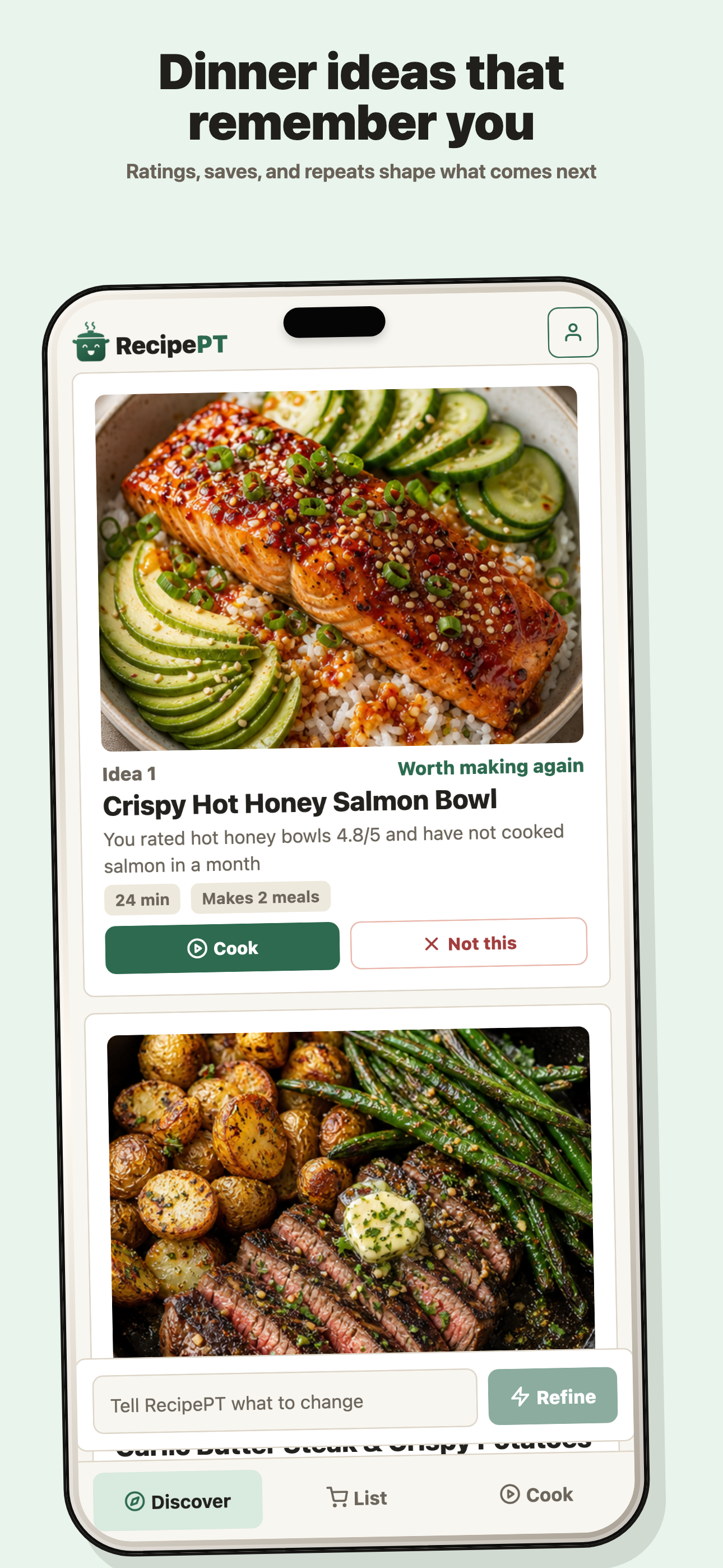
Then you say the constraint out loud instead of translating it into search terms. Type "they're boneless" and the ideas move to the ones that do not need a 45 minute roast. Type "nothing that dirties two pans" and the smashed potatoes drop out. Type "no rosemary, I hate it" and it stops appearing, tonight and in November, because the things you rule out are what it holds onto rather than what it asks you again next week.
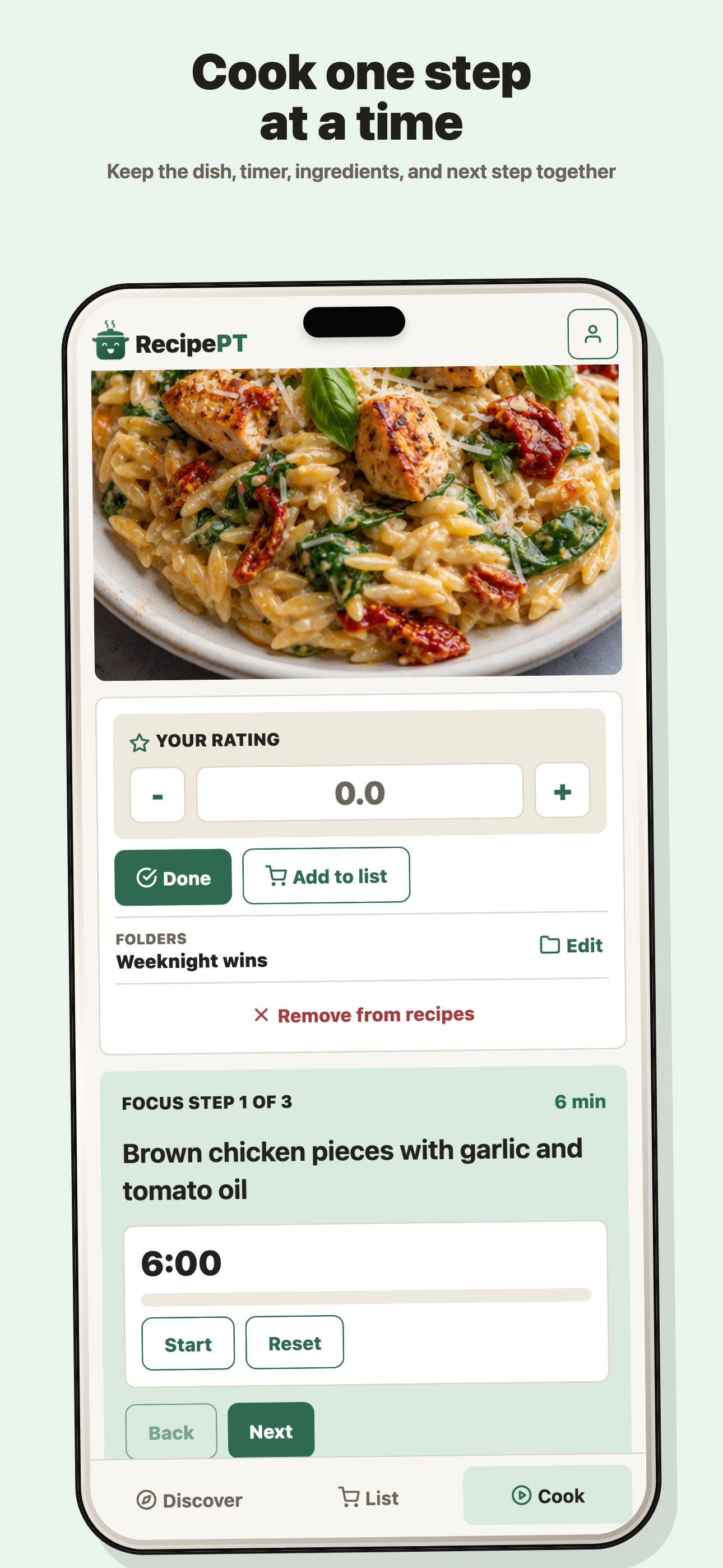
You do not need an app to cut a potato smaller. You need one on the nights when you already know how to cook all five of these and still cannot pick, which is most nights. Same idea as cooking from what is already in the kitchen: the ingredients answer most of the question, and the app closes the last gap.
Let RecipePT decide tonight
RecipePT learns what you actually cook and what you refuse to eat, so the ideas come back already shaped like your kitchen. Refine them by typing a sentence, and decide in seconds.
Get RecipePT on iPhoneCommon questions
Can you cook chicken thighs and potatoes on the same pan at the same time?
Yes, if the thighs are bone-in and skin-on. At 425F both want roughly 35 to 45 minutes, so they finish together when the potatoes are cut to about three quarters of an inch. Boneless thighs are the mismatch, since they are done in 20 to 25 minutes. Give the potatoes a 15 minute head start before the boneless thighs go in.
What temperature should chicken thighs be cooked to?
The USDA safe minimum internal temperature for all poultry is 165F, measured in the thickest part away from the bone. Thighs are the cut that improves past that point, because the connective tissue keeps softening, so many cooks pull them closer to 175F. Unlike breast meat, thighs do not dry out from the extra few minutes.
Which potatoes are best to roast with chicken thighs?
Waxy and all-purpose potatoes like red potatoes and Yukon Gold hold their shape through a long roast, which is what you want next to chicken. Starchy russets go fluffy inside and can fall apart in a braise, but they crisp harder, so use them when the goal is crunch and cut them larger.
Why are my roasted potatoes soggy next to the chicken?
Almost always crowding. Potatoes need contact with hot metal and room for steam to leave, so a heaped pan steams instead of roasting. Use a second sheet pan rather than a bigger pile, keep the potatoes in a single layer with space between them, and do not cover the pan with foil.