Pantry and leftover rescue
Nothing in the Fridge? A 3-Question Decision Tree for Dinner Tonight
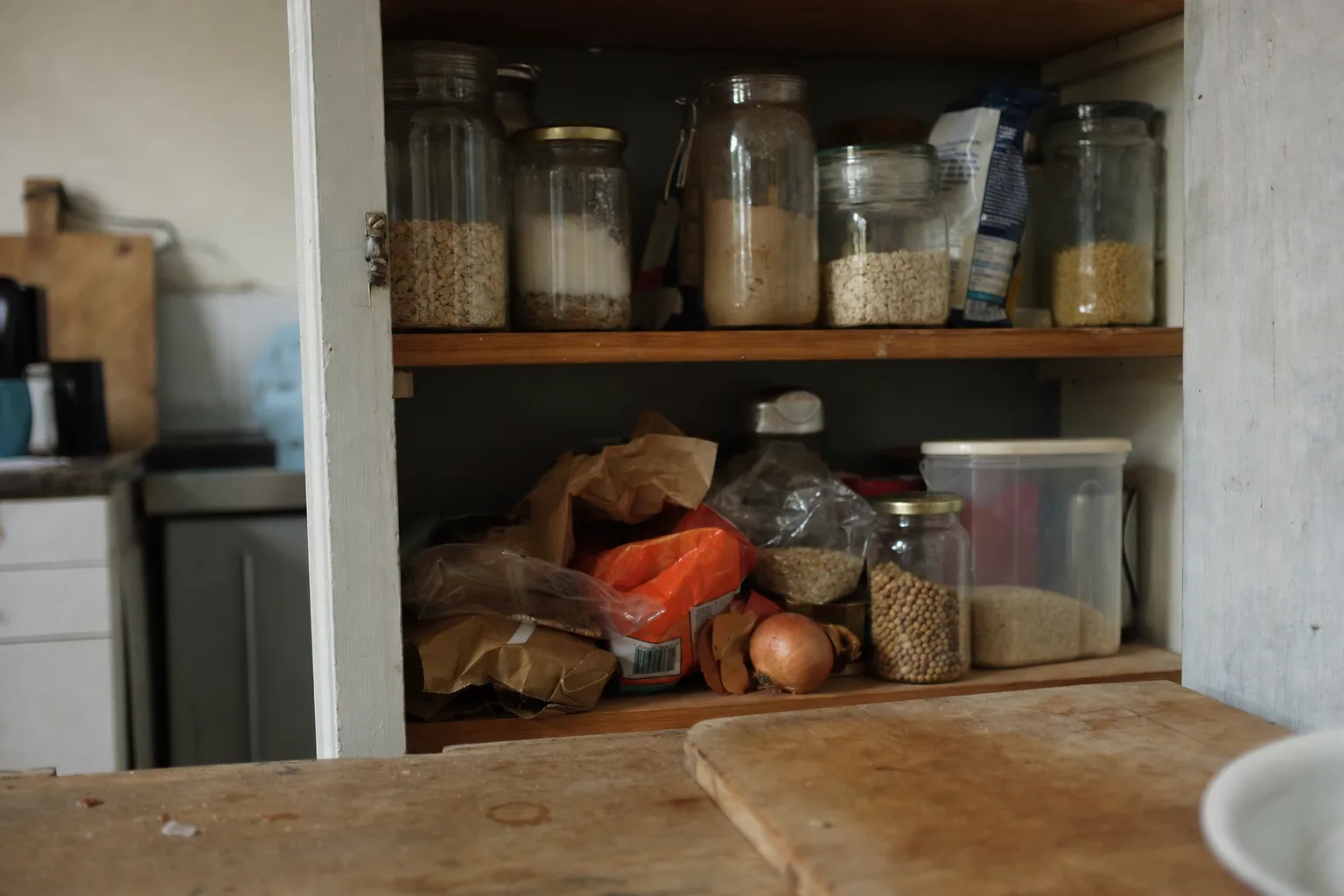
Quick answer: When the fridge looks empty, check the whole kitchen before choosing a recipe. Ask three questions: Is there one filling anchor, one carrier, and one flavor bridge? If all three exist, combine them. If one is missing, choose an honest fallback or buy that single gap. The goal is a decision, not a pantry miracle.
“There is nothing in the fridge” usually describes a feeling before it describes an inventory. The cold shelf has no obvious dinner, the grocery run did not happen, and every recipe seems to begin with the thing you lack. The useful question is not which clever recipe can rescue random scraps. It is whether the whole kitchen contains the three jobs a dinner needs.
Current results mostly answer with galleries. Delish offers 12 recipes, while Food Network offers 46 pantry ideas. Those can be useful after you know what kind of meal your shelves can support. This tree comes first. It produces one of three honest outcomes: cook, assemble, or stop.
What should you make when it feels like there is nothing in the fridge?
Check the pantry and freezer for three roles: one substantial anchor, one carrier, and one flavor bridge. Beans, eggs, lentils, tuna, or a frozen main can anchor. Rice, pasta, bread, tortillas, or potatoes can carry. Salsa, tomatoes, broth, pesto, curry paste, or soy sauce can connect them.
This is not permission to pretend any three objects make a satisfying meal. The roles must make sense together, fit the people eating, and be in usable condition. They are a fast inventory language. Instead of reading every label and imagining twenty recipes, you are checking whether the kitchen can produce a coherent direction at all.
If there is fresh food that genuinely needs using, switch to the separate expiration-first method for cooking from the fridge. That guide starts with an ingredient on a clock. This one starts after you have looked and found no fresh anchor worth building around.
Why should you look beyond the fridge before giving up?
An empty-looking fridge says little about the pantry, freezer, bread box, or counter. Dinner may be hiding as dried pasta, canned beans, frozen vegetables, tortillas, or potatoes rather than a plated leftover. Make one lap through every storage zone, but give yourself two minutes so inventory does not become another avoidance ritual.
Search by role, not aisle. First look for the thing that makes the meal feel real. Then look for what carries it. Finally look for the ingredient that gives those two a shared direction. A jar of mustard is not an anchor. A bag of rice is not a complete plan. Both become useful after the other roles exist.
Keep the audit literal. A shopping list is not pantry inventory, and an ingredient you vaguely remember buying is not available until you find it. That same rule applies to apps. A tool can organize what you report, but it should not claim that groceries you once listed are still in the house.
Question 1: Do you have one meal anchor?
Find one item sturdy enough to make dinner feel intentional: beans, lentils, eggs, canned fish, a frozen main, or another household staple you already treat as central. Pick one, not every possible candidate. If no anchor exists or none fits tonight's eaters, skip the recipe search and move to the stop rule.
“Anchor” is a decision role, not a nutrition claim. It is the ingredient you would put in the name of the meal: beans and rice, tuna pasta, lentil soup, eggs on toast. Your household may use entirely different staples. The test is whether naming that item makes the rest of dinner easier to describe.
Choose the anchor before considering what sounds most exciting. Excitement is expensive when the kitchen is sparse because it encourages you to invent missing ingredients. The best anchor tonight is the usable one already present, accepted by the people eating, and compatible with the effort you actually have.
Question 2: Do you have one carrier that makes it a meal?
Choose one familiar base that can carry the anchor: rice, pasta, noodles, bread, tortillas, potatoes, or another staple you know how to prepare. The carrier prevents a can or freezer item from remaining an isolated snack. Follow its package directions rather than borrowing a confident time or ratio from a generic pantry list.
This question separates “we have food” from “we have the shape of dinner.” Beans without a base may still work for your household. Beans plus rice, tortillas, or toast point somewhere immediately. Canned tomatoes are useful, but pasta or bread tells you what job those tomatoes can perform tonight.
One carrier is enough. The empty-kitchen spiral often begins when rice, pasta, bread, and potatoes all stay live as possibilities. Select the one that fits the anchor and your energy, then mentally close the other cupboards. This tree reduces options; it is not trying to inventory them perfectly.
Question 3: Do you have one flavor bridge that connects the first two?
Find one ingredient or familiar combination that gives the anchor and carrier the same direction: salsa, canned tomatoes, broth, pesto, curry paste, soy sauce, or the oil-and-spice pairing you already use. Choose a bridge your household recognizes. Tonight is a poor moment to improvise with an unfamiliar jar just because it exists.
The bridge is where three groceries become a named direction. Beans, rice, and salsa point to a bowl or wrapped tortilla. Tuna, pasta, and tomatoes point to a pantry pasta. Lentils, flatbread, and curry paste point to a simple curry direction. These are not tested recipes or universal formulas. They are decision labels that tell you what instructions to follow next.
If the bridge is missing, decide whether dinner still makes sense plainly seasoned. If not, the shopping gap is finally specific. “There is nothing to eat” becomes “the beans and rice need salsa.” You can buy one item without accidentally turning the emergency meal into a full grocery run.
What are the three honest outcomes of the decision tree?
Cook when anchor, carrier, and bridge all need heat or preparation. Assemble when the three roles are ready to eat with little more than opening, slicing, or combining. Stop when a role is truly absent or the available combination does not fit. The tree succeeds by naming reality, even when the answer is not cooking.
- Cook. You found all three roles and they form a direction you recognize. Commit to that direction before looking up instructions. Search for the specific combination, not for “easy dinners.”
- Assemble. The meal is already mostly food rather than ingredients. Toast with a familiar topping, a tortilla with beans and salsa, or another household default can be dinner without pretending it is a cooking project.
- Stop. You lack an anchor, the food is not suitable, or the combination asks more effort than you have. Use a named fallback, buy the one gap, or order. Do not punish yourself with an hour of scrolling first.
The stop branch matters because most empty-fridge articles assume success must end in a recipe. Sometimes the correct answer is a grocery problem, a budget decision, or a low-energy night. The practical win is making that call early enough to choose deliberately.
When should you stop trying to manufacture dinner from scraps?
Stop when you cannot find a real anchor, when the available food conflicts with allergies or household needs, or when making it edible costs more effort than tonight allows. Condiments plus starch are not a moral victory. Use a trusted fallback, buy one missing component, or order before hunger turns the choice into a crisis.
A fallback is strongest when it is named before this night arrives. It might be a freezer meal, a simple shelf-stable combination, or a reliable order. The exact answer is personal. What matters is that it does not reopen a giant menu of possibilities. Our guide to systems that reduce repeated dinner decisions explains how to choose that default once.
Low energy is also a valid stop condition. If food exists but preparing it is the real blocker, use the action-based ladder in what to make when you are too tired to cook. Sparse inventory and sparse energy can feel identical, but they need different exits.
How can RecipePT help without pretending it knows your inventory?
RecipePT cannot see your fridge or maintain a live pantry count. You name the anchor, carrier, bridge, and any limits in plain language, or tap its Pantry direction, currently labeled “Big flavor from pantry staples.” It returns a small set shaped by that request and saved food rules, then lets you reject or refine.
That Pantry direction is part of the current Discover screen, checked in the product code on October 12, 2026. It is a starting prompt, not a scanner. A more precise request is better: “I have chickpeas, rice, canned tomatoes, and curry paste. No dairy. Keep cleanup low.” The inventory claim comes from you, where it belongs.
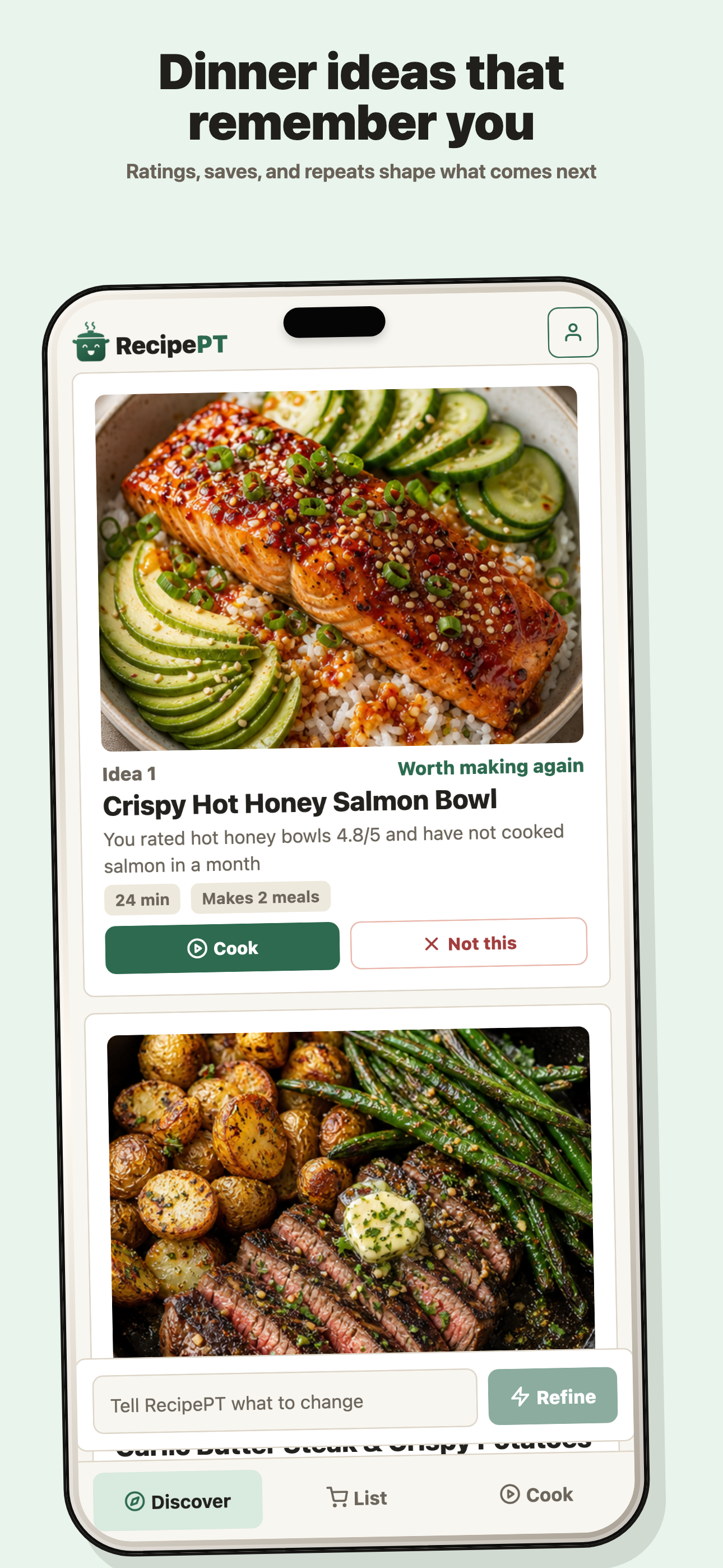
The useful product behavior comes after the first answer. If an idea assumes an ingredient you do not have, type “only use those four things” or reject it and ask for another direction. RecipePT is not the right tool when you want an exhaustive database match. For that job, our guide to apps that cook with what you have compares the different approaches.
How is this different from choosing around food that will go bad?
The expiration-first method begins with a fresh ingredient that needs using and asks which flexible meal format can absorb it. This empty-fridge tree assumes no useful fresh anchor appears. It checks whether pantry and freezer roles can form dinner at all. One prevents waste; the other tests meal viability and supplies a stop rule.
That difference is why both guides can exist without swapping one ingredient list for another. If you find spinach, mushrooms, cooked chicken, or another time-sensitive anchor, leave this tree and build around it. If you find only durable staples, continue here. If you find no anchor, stop. The branch is the point.
Want three pantry-first dinner directions?
Tell RecipePT exactly what is left, what must be avoided, and how much effort you have. Get a small set you can reject or refine instead of another pantry-recipe gallery. Available on iPhone.
Get RecipePT on iPhoneWhat else do people ask about an empty-fridge dinner?
What can I make for dinner when there is nothing in the fridge?
Check the pantry and freezer for three roles: an anchor such as beans, eggs, lentils, tuna, or a frozen main; a carrier such as rice, pasta, bread, tortillas, or potatoes; and a flavor bridge such as salsa, canned tomatoes, broth, pesto, curry paste, or soy sauce. One from each role is enough to choose a direction.
What are good emergency dinners with pantry staples?
Good emergency dinners use a repeatable structure, not a long ingredient list. Combine a sturdy anchor, a familiar carrier, and one flavor bridge: beans, rice, and salsa; pasta, tuna, and tomatoes; or lentils, flatbread, and curry paste. Treat these as directions, then follow package instructions and your household's food-safety needs.
When should I stop trying to make dinner from an empty kitchen?
Stop when you cannot find a real anchor or when the available food does not fit the people eating. Do not force condiments and starch into a pretend meal because cooking at home feels morally better. Use the fallback you already trust, buy the one missing piece, or order food. A clear stop is part of the decision tree.
Can RecipePT see what is in my fridge or pantry?
No. RecipePT does not see or maintain a live inventory of your kitchen. You name what is available, or use its Pantry direction, and it returns a small set shaped by that request and your saved food rules. You can then reject an idea or refine the next set in plain language without starting another search.