
Dinner decision fatigue
How to Stop Deciding What's for Dinner: 5 Systems Ranked by How Little Brainpower They Take
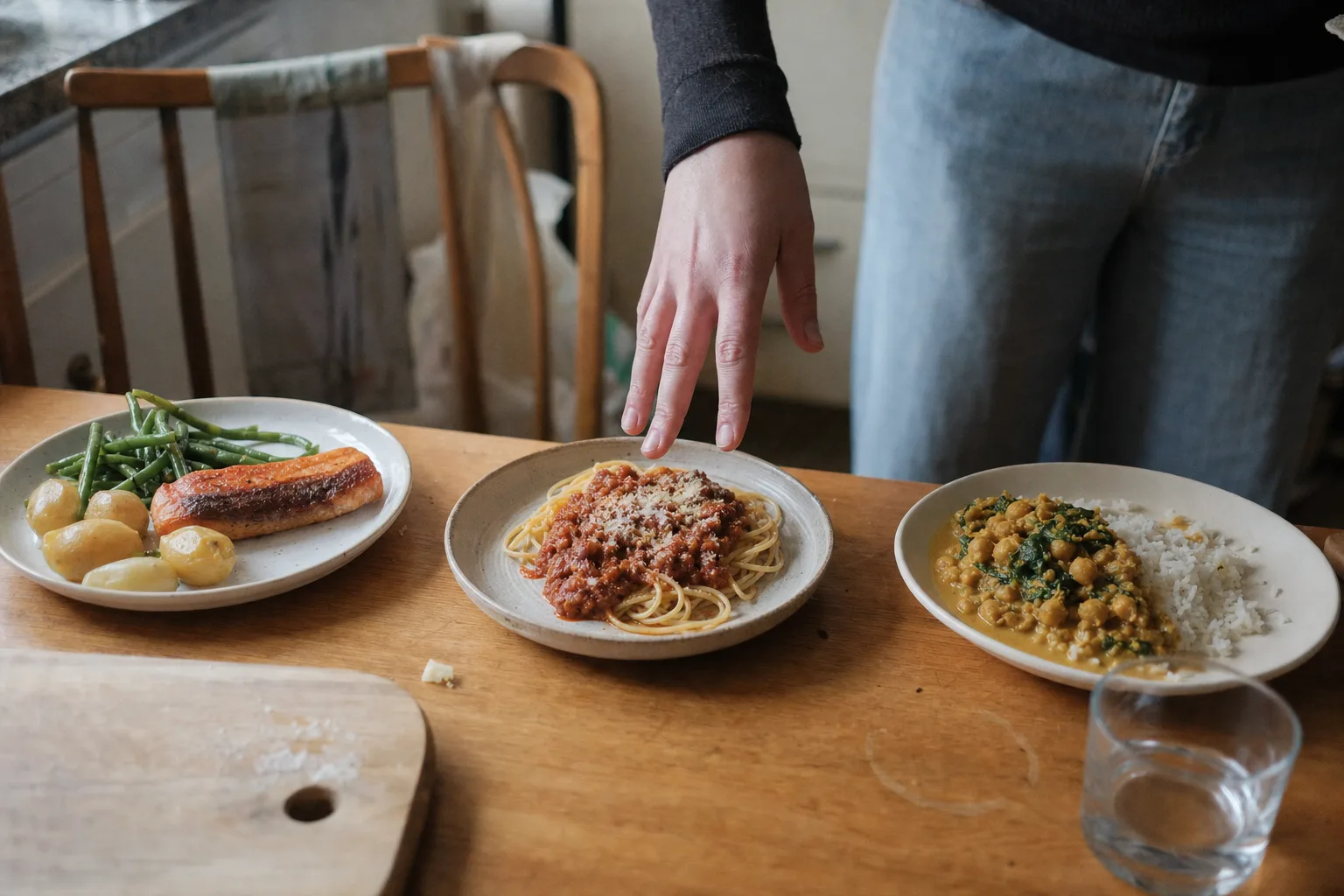
Quick answer: Stop deciding what's for dinner by installing a rule that acts before you start searching. The lowest-effort option is a named fallback meal. For more variety, use a tailored dinner decider, theme nights, a short rotation, or a flexible weekly plan. Pick the system that removes the exact step where you usually stall.
The goal is not to become better at making the same tired decision. It is to stop presenting yourself with the whole question every night. These five systems are ranked by total mental cost: what they take to set up, what they ask at 6pm, and what happens after Tuesday goes off plan.
What is the easiest way to stop deciding what's for dinner?
Make the decision smaller before you are hungry. A named fallback removes it entirely, while themes, rotations, plans, and tailored suggestions each remove a different part. The easiest sustainable system is not automatically the strictest one. It is the one you can resume after a late meeting or changed appetite without rebuilding the week.
Most dinner advice measures only the final moment: how many choices are left at 6pm? That misses the work moved to Sunday, the list that goes stale, and the plan that needs a second decision when somebody no longer wants what was assigned. A system can make Tuesday effortless and still cost an exhausting hour every weekend.
This ranking counts all three bills. Setup is the thinking required before the system works. Nightly effort is what remains when dinner arrives. Repair effort is what happens when the schedule, ingredients, energy, or appetite changes. The winner for your household is the method that removes your expensive step, not the method that looks most organized.
How are the five dinner systems ranked?
The ranking starts with the lowest total thinking, not the most complete plan. A fallback asks almost nothing but offers little variety. A tailored decider stays flexible with low upkeep. Themes and rotations trade more setup for predictability. A weekly plan eliminates nightly choice only by moving the decisions into one larger session.
- A named fallback dinner: least thought, least variety, best as a safety net.
- A tailored dinner decider: low upkeep, a small choice tonight, adapts when tonight changes.
- Theme nights: low setup, one category already settled, exact dish still open.
- A short dinner rotation: more setup, quick scanning, periodic maintenance.
- A flexible weekly plan: almost no nightly choice, highest planning and repair cost.
This is not a nutrition ranking and it is not a claim that one household should eat from the same script forever. It is a ranking of decision load. If grocery precision matters more than mental effort, the weekly plan may be your number one. If the blank page is the problem, the decider moves up. The criteria stay fixed while the right answer changes with the job.
Why is a named fallback dinner ranked first?
A named fallback wins on brainpower because there is no comparison left. When your chosen trigger happens, that meal is dinner. Keep the ingredients available and define the trigger in advance, such as getting home after seven or rejecting three ideas. Its weakness is equally clear: one automatic answer cannot supply a varied week.
“Something easy” is not a fallback. It is another search query. Name the actual meal and make the trigger observable: freezer dumplings and edamame when the evening runs late, or eggs on toast after three rejected options. The point is not that either dinner is universally ideal. The point is that your rule reaches the answer before another round of browsing starts.
This method is deliberately narrow. Use it for the nights when the cost of choosing is higher than the value of variety. If you use it every night, repetition eventually creates its own friction. That is why the fallback sits at number one for minimum thought but should usually live beside a broader system, not replace one.
When does a tailored dinner decider beat a fixed plan?
A tailored decider wins when tonight changes often but your underlying food rules do not. It can start from allergies, dislikes, past meals, and the request you have right now, then offer a few candidates. You spend a small amount of thought reacting, without maintaining a rotation or repairing a schedule that no longer fits.
This system is second because it does not remove the final choice. It changes the direction of the work. Instead of recalling a dish from everything you have ever eaten, you answer something concrete: yes, not that, quicker, less rich. That is especially useful when your energy and appetite change faster than a fixed calendar can.
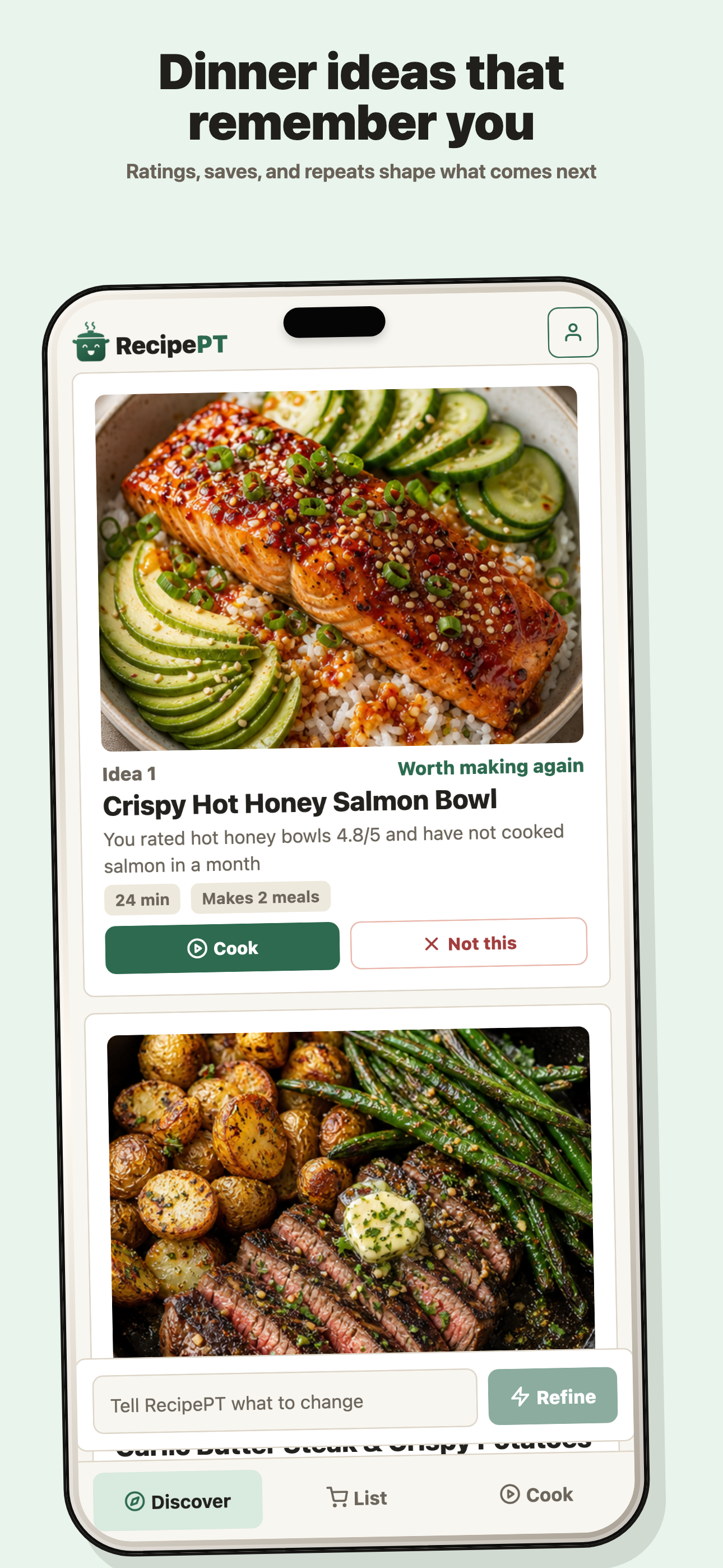
The tradeoff is honest. RecipePT is a paid iPhone app, and a paper rotation costs nothing. The app makes sense when maintaining the system is the part you will not do, or when preferences and tonight's constraints keep moving. If the same seven meals work happily every week, software is unnecessary. See the wider comparison of apps that decide dinner before choosing a tool.
Why do theme nights rank above a dinner rotation?
Theme nights need less inventory than a rotation. You remember Tuesday tacos, not ten separate recipes in order, and you can change fillings without breaking the system. They remove the category decision while preserving variety. The remaining work is choosing the version, so themes help most when infinity, rather than commitment, causes the stall.
Make themes broad enough to survive what is in the kitchen. “Tacos” can become quesadillas, bowls, or folded tortillas with beans. “Pasta” can absorb vegetables, jarred sauce, or leftovers. A theme that requires one exact recipe is a meal plan wearing a looser name, and it will break for the same reason when an ingredient or appetite changes.
Themes work poorly when the household's hard part is agreement. “It is stir-fry night” narrows the category but does not settle who wants tofu, who refuses peppers, or whether anyone can face chopping. If that is your failure point, build a rotation from dinners everyone has already accepted, or use one non-negotiable to close the choice fast.
When is a short dinner rotation worth the setup?
A rotation is worth it when recall is the problem but your household already has proven dinners. Write down about ten meals people willingly eat, keep the list visible, and select from it instead of the internet. The setup takes more thought than themes, but the options are concrete and household vetoes are already known.
Build the list from evidence, not aspiration. A saved recipe you have never cooked is still a possibility, not a dependable dinner. Start with meals that made it through the table without a negotiation. Add one only after it succeeds. Remove one when it reliably creates leftovers no one wants or a debate you keep having.
The maintenance rule is what keeps this from becoming another archive: one in, one out. Without that cap, the rotation grows until it recreates the original problem at a smaller scale. If choosing among the ten still stalls, order them and take the next eligible meal. If you keep reopening the decision, the issue is commitment rather than recall. Use the candidate-first rule instead.
Why does a weekly meal plan rank last for brainpower?
A weekly plan ranks last because it removes nightly decisions by concentrating them into a planning session, then charges repair work when life changes. It is still the strongest system for precise shopping and advance preparation. Use a flexible four-meal plan rather than seven fixed nights if schedule changes are what usually break it.
A plan is excellent when the expensive problem is groceries: repeated store trips, ingredients bought without a job, or no time to thaw what dinner needs. It is less effective when appetite and schedules are volatile. Moving Monday's meal to Thursday sounds trivial, but the original plan may depend on what spoils first, who is home, or what takes an hour.
The lighter version assigns four dinners to a week without assigning all four to exact nights. Cook the one that fits the evening, preserve room for leftovers, and keep the fallback for the night the entire plan misses. This shifts the work earlier without demanding that Sunday predict Wednesday perfectly. For a deeper version of that split, see what can be decided once and what is genuinely tonight.
Which dinner system matches the place where you get stuck?
Match the system to the failed step. Use a fallback when exhaustion blocks every choice, a decider when your mind goes blank, themes when the field feels infinite, a rotation when recall or household vetoes slow you down, and a weekly plan when shopping and preparation are the real sources of dinner stress.
- “I cannot think at all.” Name a fallback and stop there.
- “I need a suggestion that fits tonight.” Use a tailored decider.
- “There are too many directions.” Fix the category with a theme.
- “Someone rejects everything I remember.” Keep a proven household rotation.
- “The groceries never line up with the week.” Plan four flexible dinners ahead.
Do not install all five. That creates a management system for your management systems. Choose one primary method and one emergency fallback, then run them for two weeks without adding a new rule. You are looking for the first point where the system asks you to think harder than the old problem did. Fix that point or choose a simpler method.
How can you set up a lower-effort dinner system tonight?
Take ten minutes while you are not hungry. Name one fallback dinner, identify your usual stall, and choose only the system aimed at that stall. Put the rule where dinner happens, not inside another forgotten note. Tomorrow, follow it once. A system becomes useful through successful reuse, not through a perfect setup session.
- Name the failure: no ideas, too many ideas, household vetoes, missing groceries, or a changed schedule.
- Choose the matching system: fallback, decider, theme, rotation, or flexible plan.
- Write the smallest usable version: one fallback, three themes, ten proven meals, or four planned dinners.
- Make the next action visible: a note on the fridge, a shared list, or the app screen you will actually open.
- Define recovery: when the system fails, use the fallback instead of starting a new search.
If the whole dinner problem still feels shapeless, start with the broader guide to why dinner decision fatigue happens. The key here is narrower: do not ask which system seems most impressive. Ask which one removes the precise move that keeps turning dinner into an open tab in your head.
What else should you know about stopping the dinner decision?
What is the fastest way to stop deciding what's for dinner?
Name one fallback dinner before you need it, keep its ingredients available, and use it automatically when you cannot choose. It removes tonight's decision completely. It is a safety net rather than a varied weekly system, so pair it with another method for nights when you have more capacity.
Are theme nights the same as a meal plan?
No. A meal plan assigns a specific dish to a specific night. A theme night only fixes the category, such as pasta or tacos, and leaves the exact dinner open. Themes need less planning and absorb changes better, while a full plan can make shopping more exact.
How many dinners should be in a rotation?
Start with about ten dinners your household already eats willingly. That is enough range to avoid immediate repetition and short enough to scan without opening another search. Add a meal only after it succeeds at your table, and remove one when everyone has begun negotiating around it.
Can an app decide what I should make for dinner?
Yes, but the useful version should narrow the decision rather than hand you another feed. A small set shaped by your food rules, time, and past meals gives you something concrete to accept or refine. You still make the final call, but you no longer start from a blank page.
Want tonight's decision narrowed for you?
RecipePT starts with dinner ideas shaped by your taste and food rules, then lets you refine them in plain language. Use it when you want a flexible system without maintaining another list.
Get RecipePT on iPhone